Couples planning a ceremony in Wales often meet three titles quickly: registrar, humanist, and celebrant. They aren't interchangeable, and mixing them up leads to stress later. Here's a clear comparison from the point of view of someone who works as an accredited celebrant and professional photographer.
The Registrar
A registrar (or an authorised person in an approved premises) conducts the legal marriage or civil partnership in England and Wales. This is the part that makes you legally married or partnered. There are notices to give, legal words that must be said, and paperwork that must be completed. Always check current rules on GOV.UK and with your local council register office.
If you want the legal bit and a creative ceremony in a landscape, many couples do both: legal signing with a registrar, then a separate celebrant-led ceremony elsewhere.
Humanist Celebrants
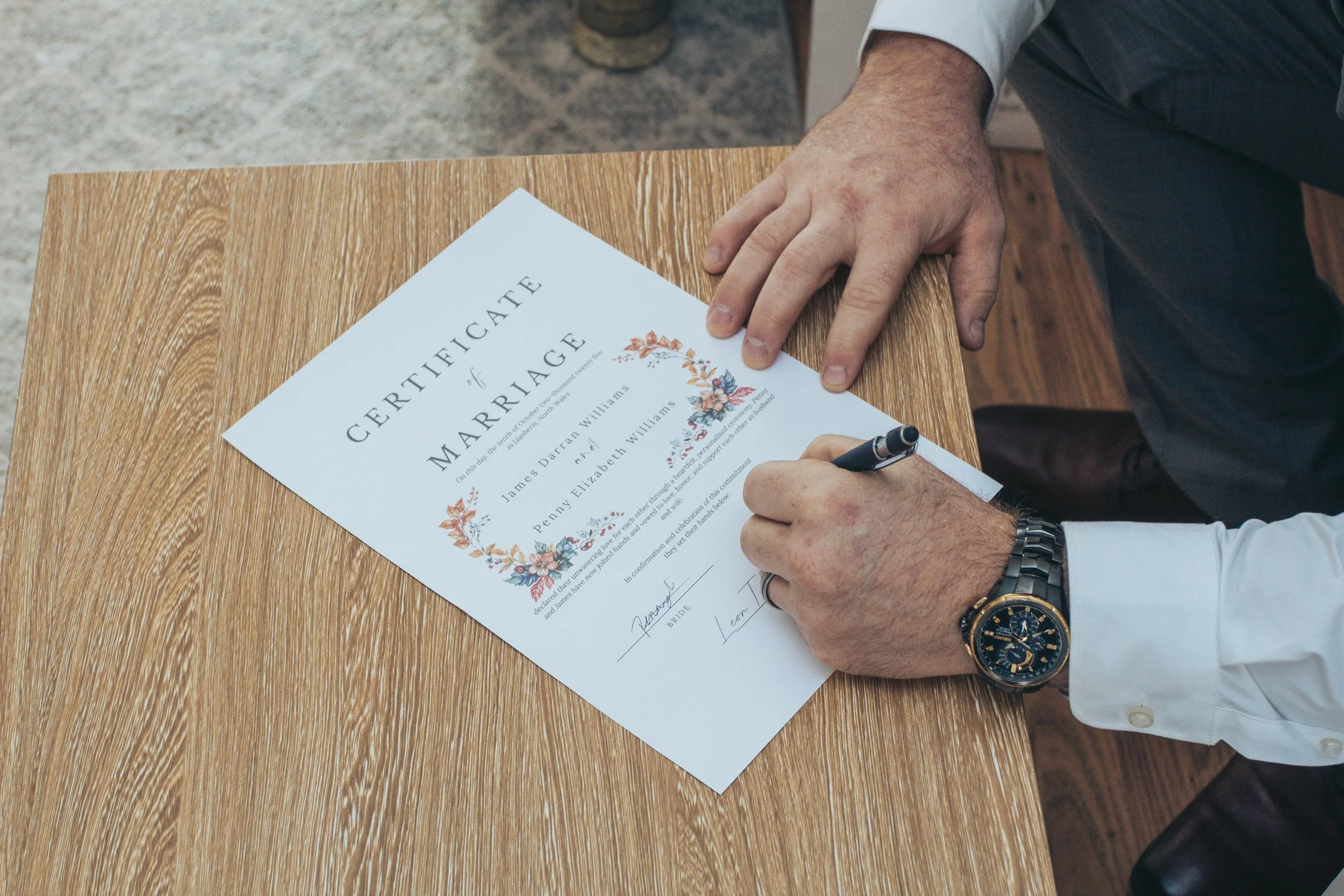
Humanist ceremonies are non-religious ceremonies led by celebrants trained within a humanist tradition. In Scotland, humanist celebrants can solemnise legal marriage. In England and Wales, the legal position has been different historically; the creative ceremony and the legal marriage have often been separate. For the latest position, rely on GOV.UK and the law reform updates rather than a blog post. My post on weddings law reform in England and Wales tracks that conversation.
Independent Celebrants
An independent celebrant writes and leads a personalised ceremony that isn't the legal marriage itself (unless and until the law says otherwise). That's the work I do. Scripts are written from scratch. Vows, readings and the shape of the day are built around you. I also photograph the day, which is why couples come to Leon Bagnall Experiences for one person holding both roles.
I don't criticise other celebrants' paths. The right fit is the person whose process you trust.
How to Choose
Ask what is legally binding, what is ceremonial, and who is responsible for each. Ask how the script is written. Ask who photographs the day if that matters to you. My post on what does a celebrant actually do goes deeper on the celebrant role without repeating it here. For elopements specifically, is eloping legal in Wales is the clearest legal companion.
Where I Sit
If you want a personalised ceremony and photographs held together, start at why choose me or plan your experience. Bring your questions. The labels matter less once you know which parts of the day each person is responsible for.
Choose the combination that makes you legally secure and emotionally present. Everything else is decoration.