People often ask me the same thing: how can one person be a celebrant and a photographer at the same time? It's a fair question. The honest answer is that it takes preparation, a few well-chosen pieces of kit and a lot of practice at stepping out of the way.
Here's what I carry to a ceremony and how it all comes together, based on how I describe it in my Deluxe elopement guide.
Scouting Comes First
Before the day, I visit your chosen location myself. Being familiar with the surroundings means I can set up my equipment naturally, without fuss and without a scramble for the best spot. It also means I know where the wind comes from and where the light will fall.
The kit is only useful if I understand the place. I'd rather arrive early and calm than be adjusting a tripod while you wait.
A Video Camera on a Tripod
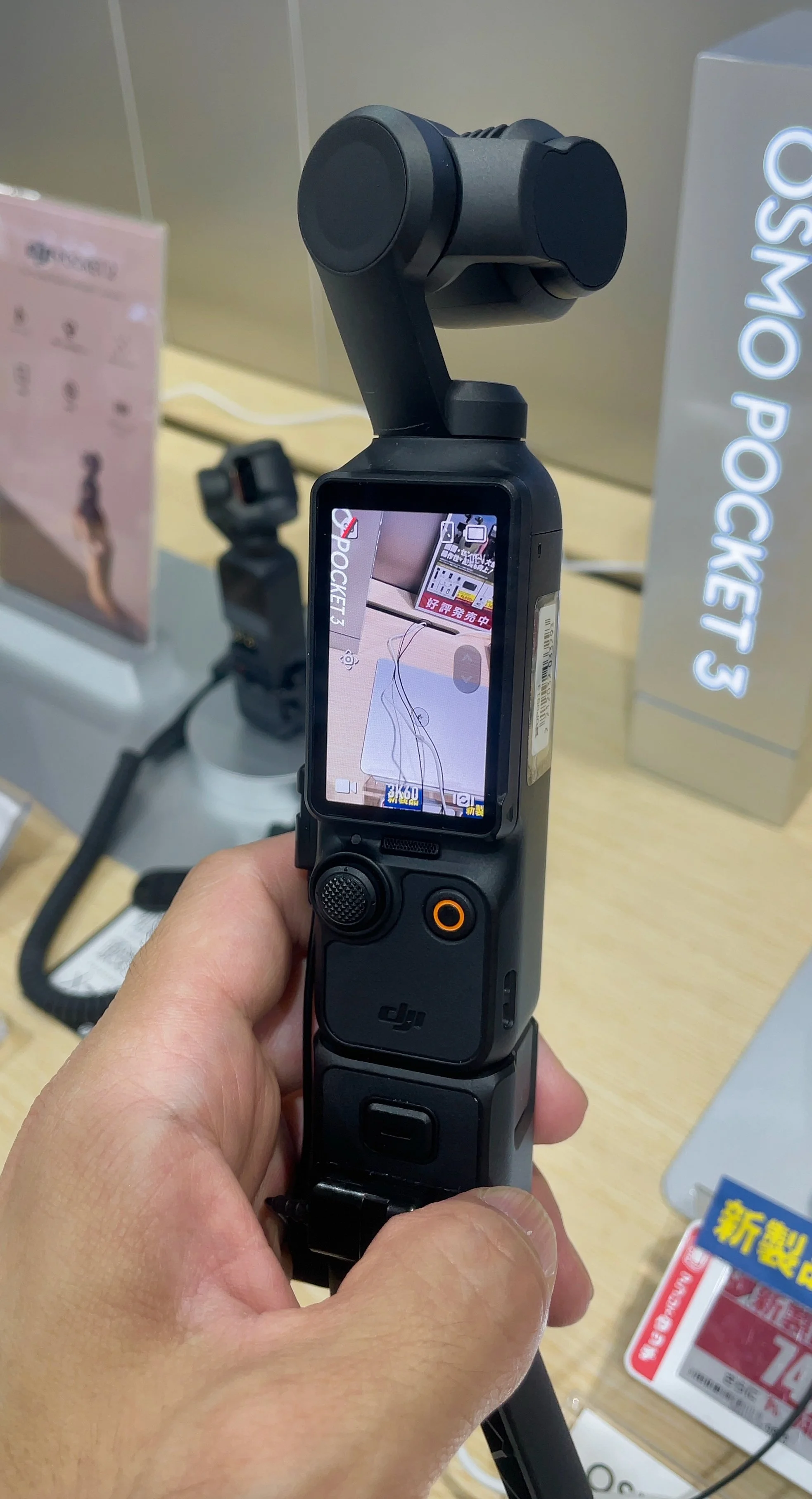
Photo: Kyu3a, CC BY-SA 4.0, via Wikimedia Commons
I begin by setting up my DJI Pocket 3 video camera on a tripod, with a wide angle lens attached and levelled with the horizon. That gives the footage a cinematic feel and keeps the two of you, and the landscape behind you, in the frame together.
It takes only a couple of minutes, and while I do it you have a little time to take a breath and reflect on everything that's led to this moment.
The Microphone on My Ceremony Folder
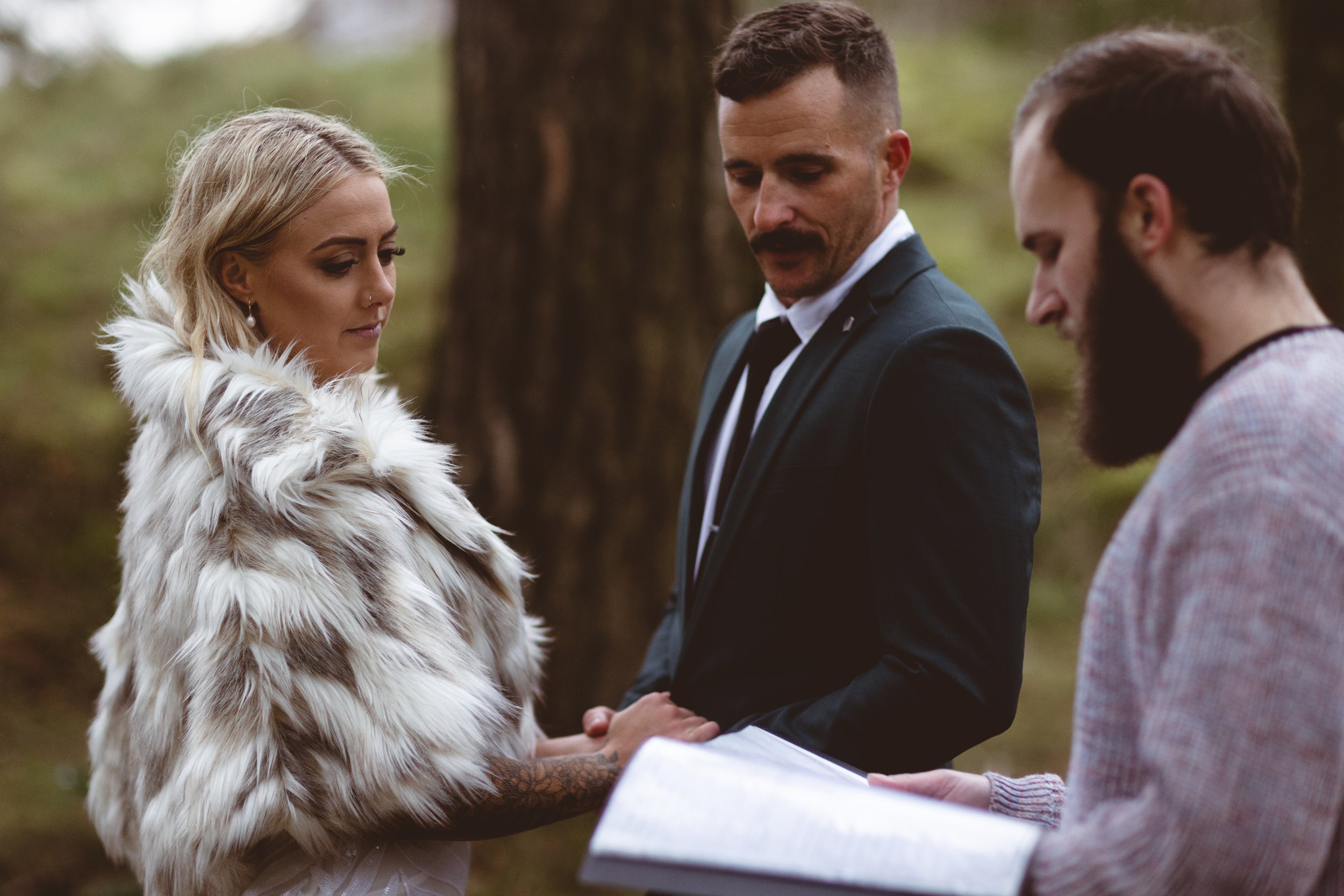
Next, I clip a wireless DJI mic onto my ceremony folder. The folder is what I hold as I speak, and it's what I hand to you when it's your turn to say your opening words. Because the microphone travels with the folder, it picks up all of the audio: my opening speech, your words to each other and your vows.
That also means you don't need to hold anything fiddly. You don't have to remember a clip-on microphone or a crumpled piece of paper in the wind. You just hold the folder and speak to each other.
Stepping Out of Frame
For most of a ceremony, I stand slightly back, typically between you. While one of you speaks, I slide out of the shot and take photographs, so the camera captures your faces rather than the back of my head. When the folder passes to the other person, I do the same again.
I've spent a long time practising how to do this smoothly, so the ceremony feels natural rather than staged. Over the years, the aim has been that you feel looked after by one person, not managed by two suppliers. That's why my guide to what a celebrant actually does matters as much as any piece of kit.
Photographs You Will Want to Keep
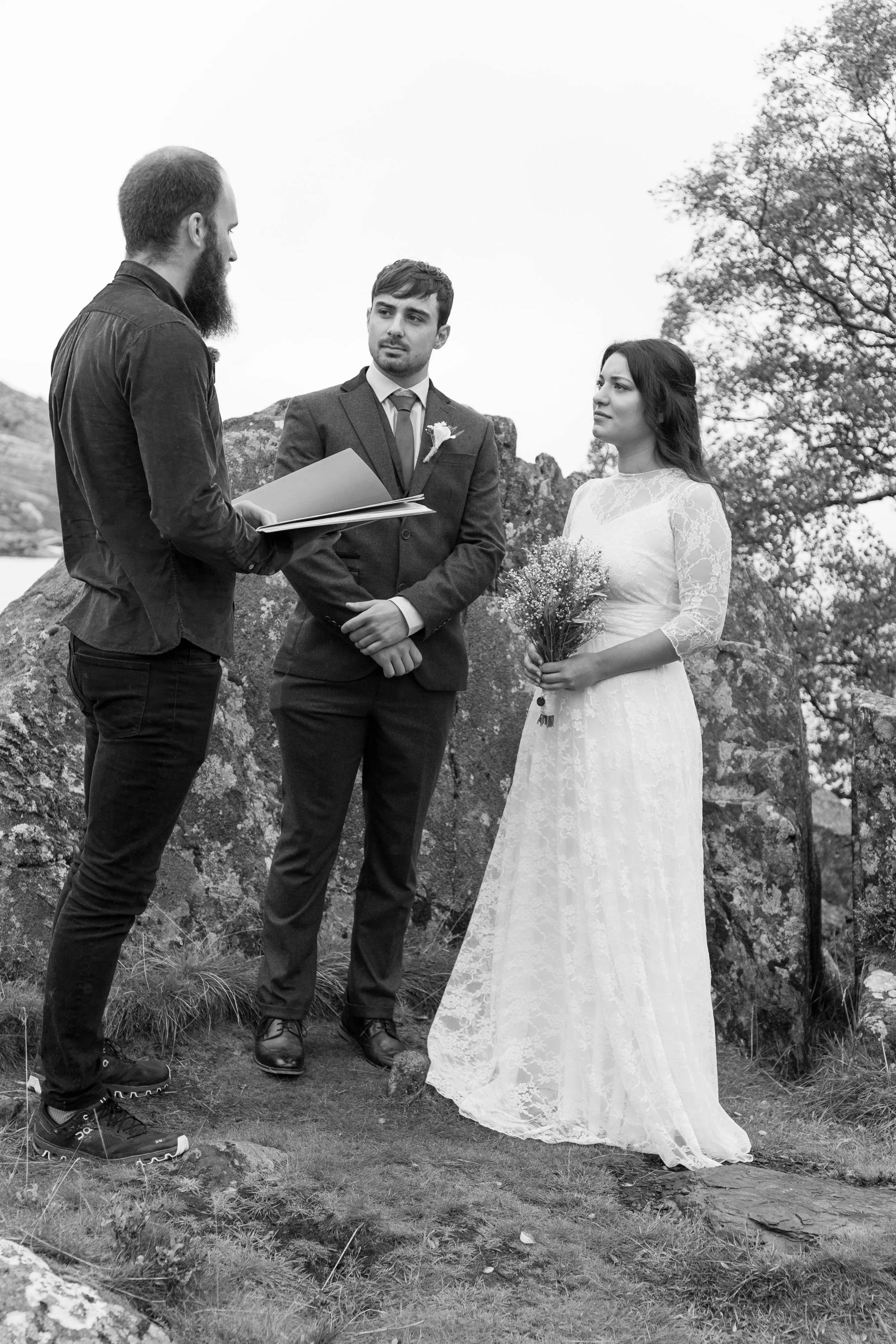
My photographs are 50mp imagery, so the colours and quality stay true to life, which you can see on my imagery page. I also carry a Polaroid camera, and the Polaroids you take home are developed in your hands.
Your pictures arrive within 4 weeks, and your videos arrive within 8 weeks. They're gathered in your Love Story Album, which lives online and as a printed album, with the Love Story Registry included.
Keeping Everything Safe
After an elopement, there are a few things to take home on the day itself. Your gift bag includes Polaroid photographs from your day, a USB backup of your memories, and your ceremony script and certification. Nothing needs to be chased later, and the wait for the full gallery and film is only a matter of weeks.
The Drone, Where It's Allowed
For some elopements I add drone footage, with the help of my DJI drone, so that you can see the landscape from above as well as from the ground. It can only fly where it's permitted, though, and the National Trust, for example, doesn't allow unauthorised drones on its land, so I only fly where it's allowed. At Twilight Ceremonies, drone coverage is an optional extra at £50, depending on the location.
Why the Detail Matters
It might seem like a lot of equipment to talk about, but the point isn't the kit. It's that nothing gets in the way of what's happening between the two of you. Everything is set up before you arrive at the ceremony, and everything is put away in time for the picnic or the sunset.
If you're comparing options, my list of questions to ask before booking a celebrant and photographer is a useful place to start, and the why choose me page explains how I work in more detail.
If You Would Like to See It Done
My love stories show how real days have turned out, and the plan your experience page is the easiest way to start a conversation about yours. For an elopement, the guide to the first meet shows how the day begins.
A camera bag and a ceremony folder are simple tools, and I only ever hope they disappear into the background of your day.